


Publications
Les scientifiques du RHU SPRINT ont déjà à leur actif de nombreuses publications dans des revues prestigieuses :
2000
Clonal T-cell receptor γ gene rearrangements in Sézary syndrome. Vergier B, et al. Blood. 2000;95:2212–2218. DOI: [https://doi.org/10.1182/blood.V95.7.2212]
2011
KIR3DL2 is a marker of malignant T cells in Sézary syndrome and mycosis fungoides. Bensussan A, Bagot M, Marie-Cardine A, et al. Journal of Investigative Dermatology. 2011;131:969–976. DOI: [https://doi.org/10.1038/jid.2010.413]
2014
KIR3DL2 is a therapeutic target in cutaneous T-cell lymphoma. Marie-Cardine A, et al. Cancer Research. 2014;74:6060–6070. DOI: [https://doi.org/10.1158/0008-5472.CAN-13-3777]
High-throughput sequencing of the T-cell receptor repertoire in cutaneous T-cell lymphoma. de Masson A, et al. Haematologica. 2014;99:527–534. DOI: [https://doi.org/10.3324/haematol.2013.094870]
Prognostic factors and clinical outcomes in Sézary syndrome. de Masson A, et al. Journal of the American Academy of Dermatology. 2014;71:926–934. DOI: [https://doi.org/10.1016/j.jaad.2014.06.018]
KIR3DL2 expression in cutaneous T-cell lymphomas. de Masson A, et al. British Journal of Dermatology. 2014;170:720–724. DOI: [https://doi.org/10.1111/bjd.12724]
2015
KIR3DL2 engagement triggers apoptosis of Sézary syndrome malignant T cells. Moins-Teisserenc H, et al. Journal of Investigative Dermatology. 2015;135:247–257. DOI: [https://doi.org/10.1038/jid.2014.363]
Alemtuzumab therapy in cutaneous T-cell lymphoma. Scarisbrick JJ, et al. Journal of Clinical Oncology. 2015;33:3766–3773. DOI: [https://doi.org/10.1200/JCO.2014.60.3969]
2017
Romidepsin for treatment of cutaneous T-cell lymphoma: long-term follow-up. Prince HM, et al. The Lancet. 2017;390:555–566. DOI: [https://doi.org/10.1016/S0140-6736(17)31599-8]
KIR3DL2 expression in cutaneous T-cell lymphomas: expanding the spectrum for KIR3DL2 targeting. Battistella M, et al. Blood. 2017;130:2900–2902. DOI: [https://doi.org/10.1182/blood-2017-06-792382]
Usefulness of KIR3DL2 to diagnose, follow-up, and manage the treatment of patients with Sézary syndrome. Hurabielle C, Thonnart N, Ram-Wolff C, et al. Clinical Cancer Research. 2017;23:3619–3627. DOI: [https://doi.org/10.1158/1078-0432.CCR-16-1732]
Gene expression profiling in Sézary syndrome identifies prognostic biomarkers. Laurent C, et al. Journal of Clinical Oncology. 2017;35:2008–2017. DOI: [https://doi.org/10.1200/JCO.2016.71.2740]
2018
High-throughput sequencing of the T-cell receptor β gene identifies aggressive early-stage mycosis fungoides. de Masson A, O’Malley JT, et al. Science Translational Medicine. 2018;10. DOI: [https://doi.org/10.1126/scitranslmed.aar5894]
Mogamulizumab versus vorinostat in previously treated cutaneous T-cell lymphoma (MAVORIC): a phase 3 trial. Kim YH, Bagot M, et al. The Lancet Oncology. 2018;19:1192–1204. DOI: [https://doi.org/10.1016/S1470-2045(18)30379-6]
2019
IPH4102, a first-in-class anti-KIR3DL2 monoclonal antibody in relapsed or refractory cutaneous T-cell lymphoma: phase 1 trial. Bagot M, Porcu P, Marie-Cardine A, et al. The Lancet Oncology. 2019;20:1160–1170. DOI: [https://doi.org/10.1016/S1470-2045(19)30320-1]
KIR3DL2 expression in cutaneous T-cell lymphomas: diagnostic and therapeutic implications. Bonnet P, Moins-Teisserenc H, et al. British Journal of Dermatology. 2019;180:419–420. DOI: [https://doi.org/10.1111/bjd.17532]
EORTC recommendations for treatment of Sézary syndrome. Scarisbrick JJ, et al. British Journal of Dermatology. 2019;181:350–357. DOI: [https://doi.org/10.1111/bjd.17559]
2020
Clonal T-cell receptor sequencing identifies disease progression in cutaneous T-cell lymphoma. O’Malley JT, de Masson A, et al. Clinical Cancer Research. 2020;26:408–418. DOI: [https://doi.org/10.1158/1078-0432.CCR-19-1968]
Immune microenvironment in cutaneous T-cell lymphomas. Piquemal D, et al. Cancers. 2020;12:3204. DOI: [https://doi.org/10.3390/cancers12113204]
2021
Genetic alterations driving Sézary syndrome pathogenesis. Poglio S, et al. Leukemia. 2021;35:1696–1709. DOI: [https://doi.org/10.1038/s41375-020-01065-2]
2022
Single-cell and molecular analysis of Sézary syndrome identifies pathogenic T-cell subsets. de Masson A, et al. Blood. 2022;139:1820–1832. DOI: [https://doi.org/10.1182/blood.2021013417]
KIR3DL2 targeting induces antitumor activity in cutaneous T-cell lymphoma. Sonigo C, Marie-Cardine A, et al. Blood. 2022;139:2712–2716. DOI: [https://doi.org/10.1182/blood.2021013804]
Genomic landscape of Sézary syndrome. Vallet N, et al. Blood. 2022;140:2500–2513. DOI: [https://doi.org/10.1182/blood.2022016789]
2023
Genomic and transcriptomic landscape of Sézary syndrome. Menguy S, Pham-Ledard A, et al. Journal of Investigative Dermatology. 2023;143:124-133.e3. DOI: [https://doi.org/10.1016/j.jid.2022.08.026]
Single-cell analysis of malignant T cells in cutaneous T-cell lymphoma. Van Anh TA, Battistella M, et al. Journal of Investigative Dermatology. 2023. DOI: [https://doi.org/10.1016/j.jid.2023.01.027]
2024
Failure of second challenge with mogamulizumab in C-C chemokine receptor 4-positive cutaneous T-cell lymphoma. Stammler R, Ta VA, Cohen E, Ram-Wolff C, Bozonnat A, Battesti G, Louveau B, Mourah S, Battistella M, Moins-Teisserenc H, de Masson A. British Journal of Dermatology. 2024;190:920–921. DOI: [https://doi.org/10.1093/bjd/ljae085]
Targeting TGF-β Activation in Cutaneous T-Cell Lymphomas. Giustiniani J, Ta VA, Belkhelouat S, Battistella M, Ouahbi D, Ram-Wolff C, Louveau B, Mourah S, Bagot M, Moins-Teisserenc H, Ortonne N, Bensussan A, de Masson A. Journal of Investigative Dermatology. 2024;144:2329–2332. DOI: [https://doi.org/10.1016/j.jid.2024.03.019]
Real-life efficacy of immunotherapy for Sézary syndrome: a multicenter observational cohort study. Bozonnat A, Beylot-Barry M, Dereure O, D’Incan M, Quereux G, Guenova E, Perier-Muzet M, Dalle S, Grange F, Viguier MA, Ram-Wolff C, Feldmeyer L, Beltraminelli H, Bonnet N, Amatore F, Maubec E, Franck N, Machet L, Chasset F, Brunet-Possenti F, Bouaziz JD, Battistella M, Donzel M, Pham-Ledard A, Bejar C, Moins-Teisserenc H, Mourah S, Saiag P, Hainaut E, Michel C, Bens G, Adamski H, Aubin F, Boulinguez S, Joly P, Tedbirt B, Templier I, Troin L, Montaudié H, Ingen-Housz-Oro S, Faiz S, Mortier L, Dobos G, Bagot M, Resche-Rigon M, Montlahuc C, Serret-Larmande A, de Masson A. EClinicalMedicine. 2024;73:102679. DOI: [https://doi.org/10.1016/j.eclinm.2024.102679]
Pathophysiology of cutaneous T-cell lymphomas: Perspective from a French referral centre. de Masson A, Lazaridou I, Moins-Teisserenc H, Ram-Wolff C, Giustiniani J, Bagot M, Battistella M, Bensussan A. Immunology Letters. 2024;268:106871. DOI: [https://doi.org/10.1016/j.imlet.2024.106871]
2025
Computational Free Flow Cytometry for Sézary Cells Identification and Quantification. Ta VA, Ram-Wolff C, Annabi E, Chauvel C, de Masson A, Beylot-Barry M, Soulier J, Bagot M, Vial JP, Veyrat-Masson R, Moins-Teisserenc H. Journal of Investigative Dermatology. 2025. DOI: [https://doi.org/10.1016/j.jid.2025.03.003]

Podcast – Maladie rare – Prendre en charge un mycosis fongoïde
Caroline Ram-Wolff, dermatologue au sein du service de dermatologie de l’hôpital Saint-Louis à Paris, coordinatrice médicale du conseil scientifique du GFELC et membre du projet RHU SPRINT, était récemment l’invitée du podcast RARE à l’écoute 🎤🧬 1er Média d’Influence 100% maladies rares. Dans ce troisième épisode de la série consacrée au lymphome T cutané, elle revient sur les différentes stratégies de prise en charge des patients atteints de mycosis fongoïde.
Podcast – Maladie rare – Comment diagnostiquer un mycosis fongoïde ?
Dans le deuxième épisode du podcast RARE à l'écoute 🎤🧬 1er Média d’Influence 100% maladies rares, Nicolas Ortonne — pathologiste, chef d’équipe à l'IMRB - Institut Mondor de Recherche Biomédicale et membre du consortium RHU SPRINT — partage son expérience et décrypte...
Podcast – Maladie rare – Qu’appelle-t-on mycosis fongoïde ?
Martine Bagot, membre du consortium RHU SPRINT, et professeure de dermatologie à Université Paris Cité était récemment l’invitée du podcast RARE à l’écoute. À cette occasion, elle est revenue sur le mycosis fongoïde, la forme la plus fréquente de lymphomes cutanés.

NEWSLETTER N°2 DU RHU SPRINT
Bienvenue sur la newsletter du RHU SPRINT ! Cette page a pour vocation de vous tenir informés des avancées du projet, de partager les temps forts et de valoriser les contributions de l’ensemble des membres du consortium. À travers ces actualités, nous souhaitons...

Lymphomes T cutanés : ces cancers de la peau méconnus, mais en augmentation…
Découvrez l’article d’Adèle de Masson intitulé Lymphomes T cutanés : ces cancers de la peau méconnus, mais en augmentation publié dans The Conversation pour en savoir plus sur ces cancers de la peau encore trop méconnus.
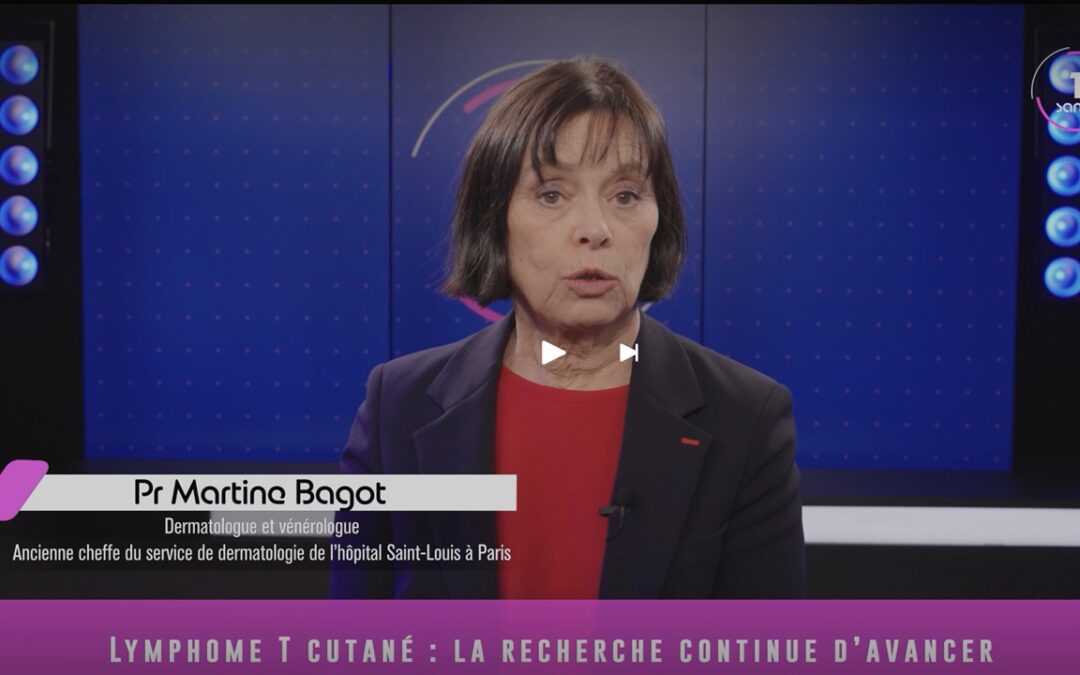
Comment la prise en charge du lymphome T cutané a-t-elle évolué ?
Pour l'Observatoire de la Santé, Martine Bagot était l'invitée de la Minute de la Santé et parlait du défi d'établir un diagnostic plus précocement. https://www.dailymotion.com/video/x9eucuw
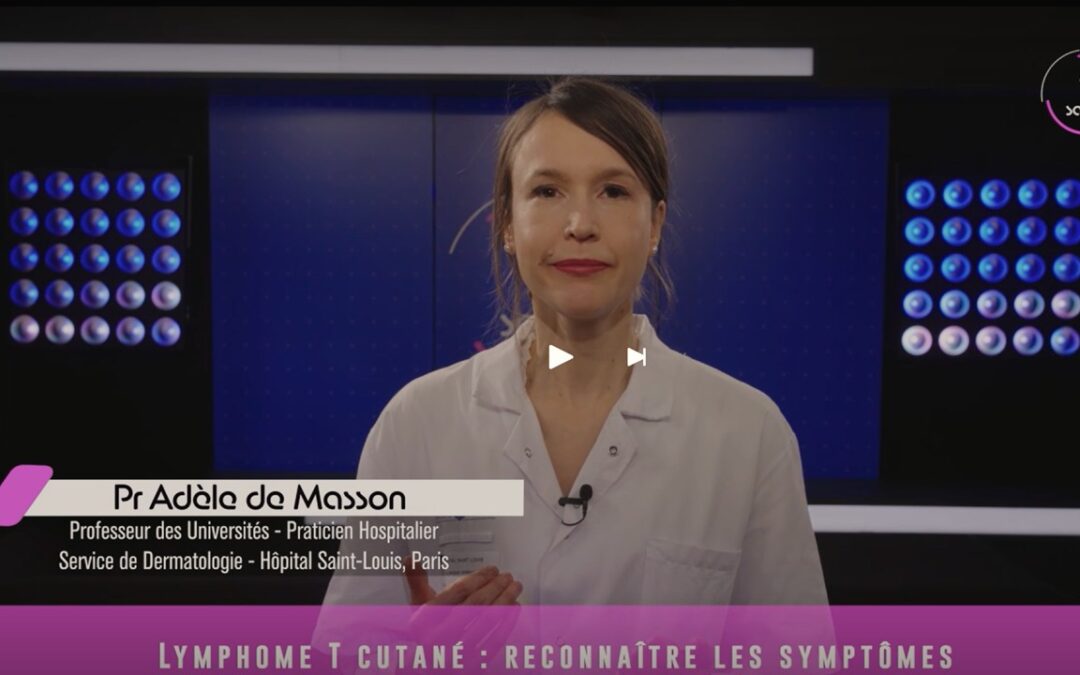
Reconnaître les symptômes du lymphome T cutané
Pour l’Observatoire de la Santé, Adèle de Masson, porteuse du projet RHU SPRINT, explique dans l’émission La minute de la Santé comment reconnaitre les symptômes du lymphome T cutané. https://www.dailymotion.com/video/x9eopmo
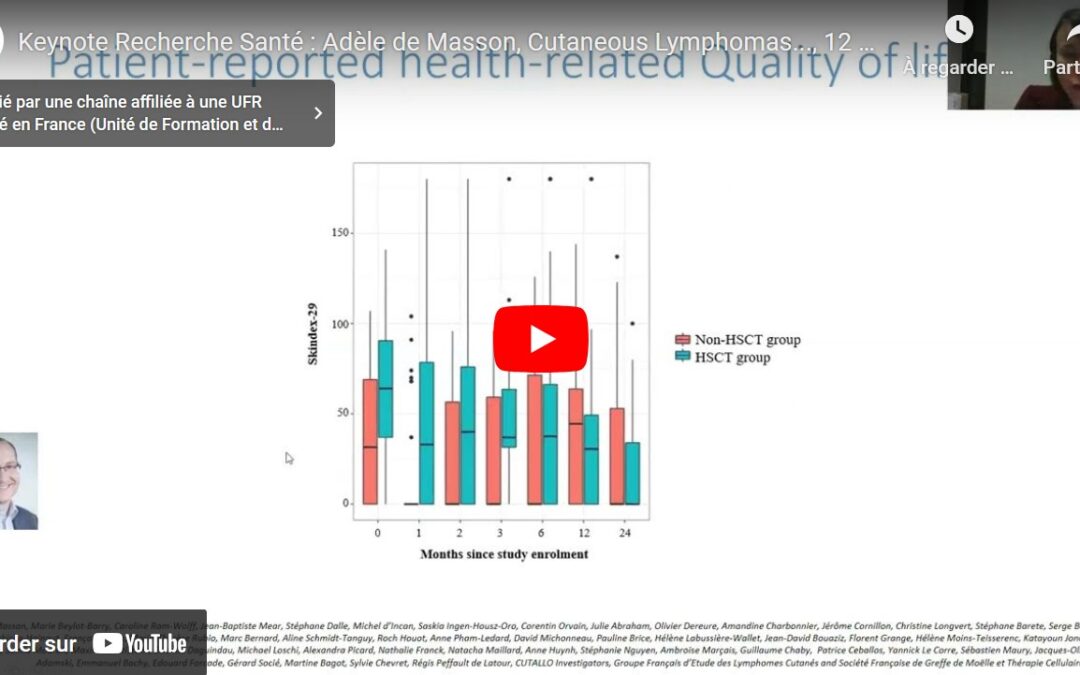
Keynote du Pr Adèle de MASSON sur les lymphomes T cutanés, 12/11/2024
Le pôle recherche et innovation de la Faculté de Santé organise des Keynotes mensuelles en ligne, sur des sujets à la pointe de la recherche. Retrouvez ici l’enregistrement vidéo de la Keynote du 12 novembre 2024, proposée par le Pr Adèle de Masson sur le thème :...